
The Role of Tracking Software in Managing Daily Business Operations
In today’s competitive business environment, companies face the daily challenge of keeping operations efficient, transparent, and responsive. From managing inventory to processing invoices and tracking procurement, every component of a business must function in sync. This is where business operations tracking software becomes a crucial operational asset.
By consolidating key business functions into one centralized platform, this type of software enables streamlined workflows, real-time visibility, and faster decision-making. It plays a critical role in ensuring that daily operations run smoothly across departments including finance, inventory, procurement, and customer management.
Each core functionality within the tracking platform contributes to operational success. Below, we examine the specific roles that support and optimize daily business processes, starting with the operational control center: the Dashboard.
The Dashboard: Real-Time Operational Oversight
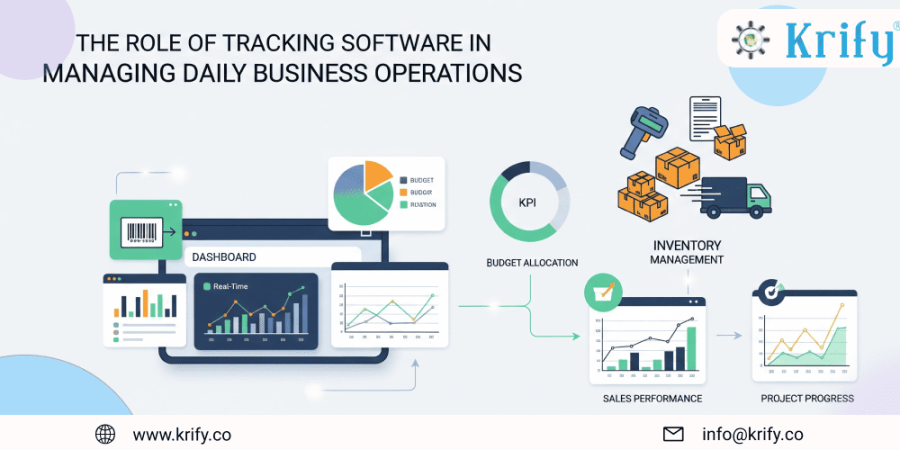
The Dashboard acts as the operational nerve center. By offering live summaries of purchases, bills, sellers, and customers, it plays a crucial role in giving leadership a snapshot of business health. This visibility helps teams prioritize tasks, spot anomalies, and make proactive decisions, essential for smooth day-to-day functioning.
Bills and Purchases: Enabling Financial Control
Bills (Sales & Invoice Management)
One of the most vital roles of tracking software is managing outbound transactions. By overseeing sales invoices from creation to payment, businesses ensure consistent revenue tracking and reduce billing errors, two critical elements of daily financial operations.
Purchases (Procurement Tracking)
This module ensures the uninterrupted flow of goods and services. It supports accurate purchase orders, inventory restocking, and supplier performance tracking. As a result, businesses can avoid production delays and stockouts that often disrupt daily workflows.
Inventory Management: Maintaining Stock Accuracy and Availability
Items & Items Stock
The software’s inventory module plays a pivotal role in maintaining operational balance. By offering real-time updates on stock levels and detailed item descriptions, businesses avoid overstocking, understocking, or delivery delays, issues that can bring daily operations to a standstill.
Quantity Type (Flexible Units)
With the ability to track products in different units (pieces, liters, kgs), this feature supports operational accuracy and avoids confusion in inventory handling across departments.
Reports, Relationships, and User Access: Supporting Decision-Making and Accountability
Reports (Business Intelligence)
This feature transforms daily data into strategic insights. It plays a decision-support role by helping businesses identify bottlenecks, track performance, and plan ahead, all while using real-time operational data.
Customers & Sellers (Relationship Management)
Beyond transactions, the software maintains detailed records of buyers and vendors. This supports effective communication, relationship nurturing, and timely response to issues, all critical for day-to-day continuity.
Users (Role-Based Access Control)
The software also plays a security and workflow coordination role. By defining user roles and access levels, it prevents unauthorized actions and ensures that employees work within the boundaries of their responsibilities.
Key Roles Played by Business Operations Tracking Software
To summarize, here are the major roles this software performs in daily business management:
- Operational Oversight: Live data dashboards provide visibility into performance metrics.
- Financial Management: Sales and purchases are recorded, tracked, and reconciled.
- Inventory Accuracy: Stock levels are updated in real-time, avoiding supply issues.
- Relationship Coordination: Vendor and customer records enable faster communication.
- Strategic Decision Support: Reports help in making informed, data-driven decisions.
- Access and Accountability: User permissions ensure secure and efficient workflows.
Conclusion
From real-time monitoring to financial control, from stock accuracy to secure user access, business operations tracking software is not just a tool, but a strategic asset. It actively manages, supports, and enhances all areas of daily business activity.
Krify’s custom-built tracking solution is designed to meet these operational needs with precision and scalability.
Ready to optimize your business operations?
Get in touch with Krify to explore a solution tailored for your workflow and goals.